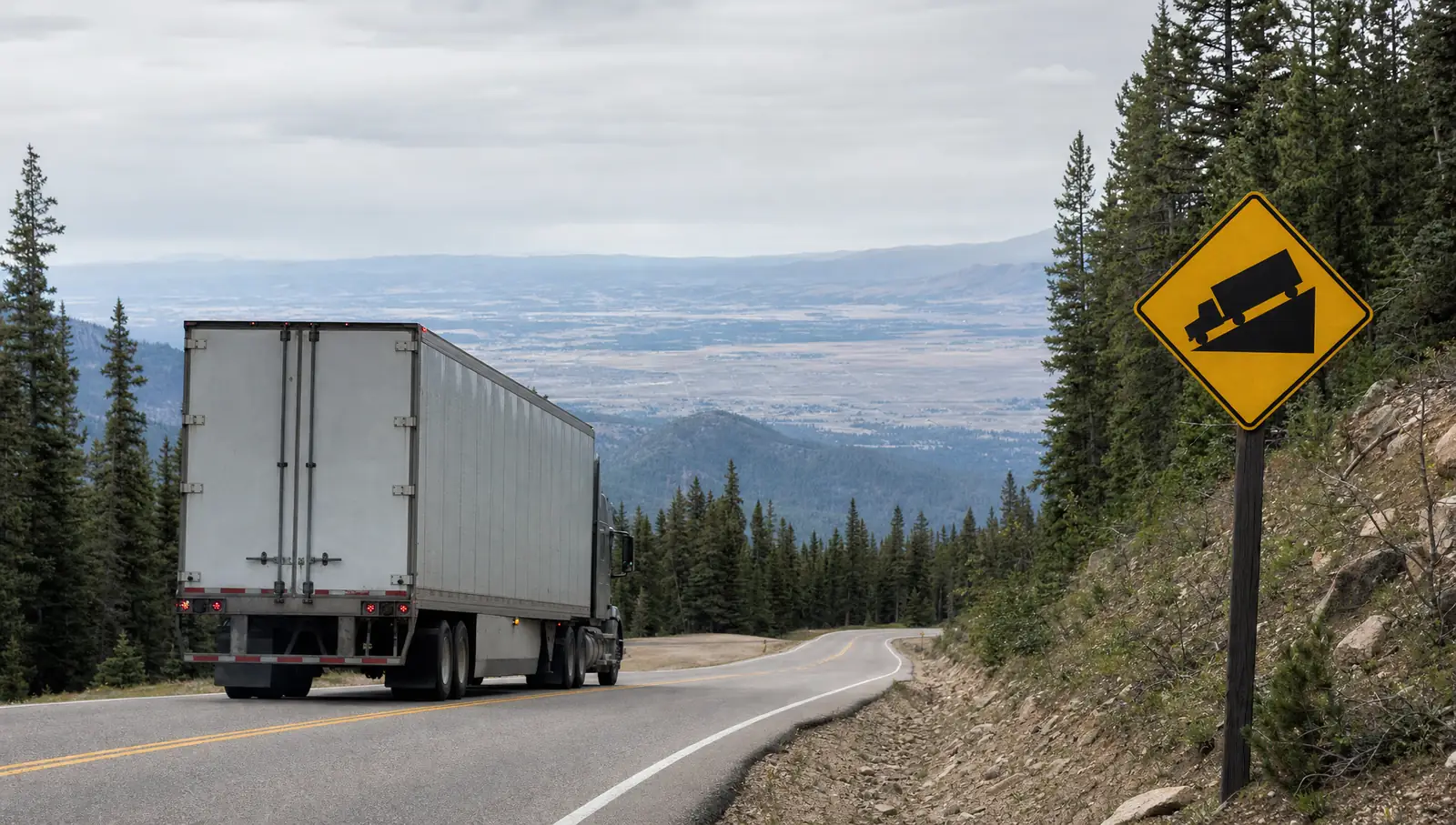
Low Gear at the Top of the Grade
The gear you choose before the road tips down decides how the next six miles go.
The old advice on a mountain pass is to go down in the same gear you would use to climb it. It is a rule of thumb, and a decent one. The point behind it is that on a long downgrade, the engine and transmission do the steady work of holding speed back. The service brakes are for trimming speed, not for holding it.
Choose the gear before the crest
Slow down and select the gear while the truck is still level or climbing. Trying to downshift once a heavy truck is already gathering speed on the hill can leave the transmission in neutral at the worst moment, with nothing holding the load but the brakes. The warning signs at the top of a big grade, with the length in miles and the percentage, are there so you can make this choice early.
Snub braking
Pick a safe speed for the grade and the load. When the truck reaches it, apply the brakes firmly enough to feel a real slowdown, bring the speed down about five miles per hour below that number, and then release. Let the speed creep back up and do it again. Each application lasts a few seconds.
Light, constant pressure feels gentler and is worse. It heats the drums steadily without the cooling time in between, and hot drums expand away from the linings. That is brake fade, and on a long grade it builds without much warning until the pedal stops doing what it did at the top. Brakes that are out of adjustment fade sooner, which is why the drums and slack adjusters during the pre-trip deserve the attention they get.
Engine brakes
An engine brake turns the engine into an air compressor and holds back a great deal of speed without touching the service brakes. It is the driver's best friend on a grade. Some towns post signs restricting their use because of the noise, and on slick roads it should be used with care, since it slows the drive wheels and a light trailer can push.
Weather on the pass
Grades that are routine in summer are a different job in snow and ice, and the forecast for the pass matters more than the forecast at the bottom. The National Weather Service winter safety pages are a reasonable place to start before a winter run through the mountains.
The ramp
Runaway truck ramps are gravel beds or uphill lanes off the side of the road, and they exist because brakes do fail. Drivers hesitate to use them, since getting a truck out of one is a tow bill and some paperwork. That is a small price. A truck that can't slow down belongs in the gravel, and the decision is best made at the first ramp sign.