Through Austin on I-35
The stretch of interstate most Texas freight crosses at some point, and what it asks of a truck and of the cars around it.
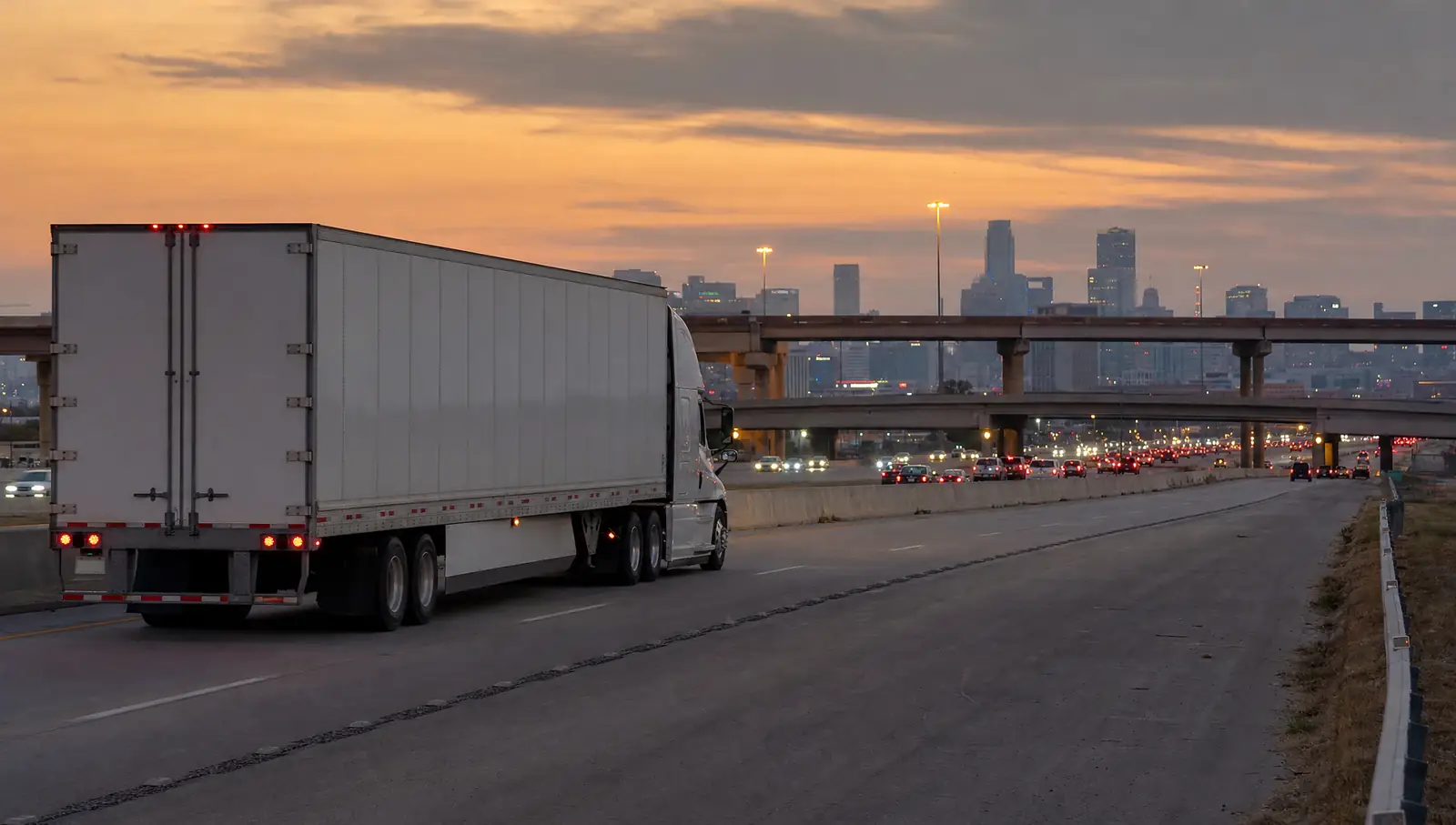
Interstate 35 carries freight from the border at Laredo all the way north to Minnesota, and in Texas it threads the four big metro areas one after another. Ask drivers which part of that run they plan around and Austin comes up fast. The city sits right on the line, the highway goes straight through the middle of it, and the traffic around downtown can stack up at almost any hour.
The decks and the work zone
North of downtown, I-35 splits into an upper and a lower deck for several miles. The upper deck carries through traffic with few exits. The lower deck runs closer to the frontage roads and picks up the merges. Choosing a deck early matters more in a truck than in a car, because a missed split means miles of city streets before you can get back on.
That layout is being rebuilt. The state's reconstruction of I-35 through central Austin is taking the upper decks down and lowering the main lanes, and the work will run for years. In practice that means lane shifts, narrowed shoulders, concrete barrier on both sides and exits that move from one month to the next. The same rules from driving a truck through a work zone apply here, every trip: slow down early, hold your lane through the shift, and leave room ahead for the car that will cut in at the last second.
Frontage roads and turnarounds
Texas builds frontage roads along most of its freeways, and Austin's carry a lot of local traffic. They are one-way, they meet cross streets at signals, and drivers on them merge onto the main lanes across short ramps. At many crossings a dedicated U-turn lane lets traffic swing back the other way under the highway without stopping at the light.
For a truck, a frontage road is a slow street with tight corners. Right turns off it need the same wide swing as any city turn, and cars on the right side won't expect the trailer to come across. If a route sends you onto the frontage road to reach a dock, check the turn on the map first.
The way around
State Highway 130 runs east of the city, roughly from Georgetown down toward Seguin. It is a toll road, and it was built in large part to give through traffic a way around Austin. A loaded truck pays more than a car, and not every carrier will cover the toll. Many drivers still take it when the timing is bad on I-35, because the toll costs less than an hour lost in the work zone against an hours-of-service clock.
When a crash happens there
Dense traffic, lane shifts and frontage-road merges mean fender-benders on this stretch are common, and some are worse. If you are in one, in a truck or in a car, the first steps are the same anywhere in Texas. Stop. Check whether anyone is hurt and call 911 if they are. Move the vehicles out of the travel lanes if they can be driven. Then trade names, addresses, registration and insurance details with the other driver, which state law requires.
Where a tractor-trailer is involved, a few more details help later. Interstate carriers show a USDOT number on the side of the cab; write it down along with the company name and the trailer number. Take photos of the vehicles where they stopped, the lane markings and any work-zone signs. When an officer works the crash, ask for the report number, since the report can be bought from the state once it is filed.
A crash with injuries brings more than paperwork. There are insurance calls, medical bills and often a trucking company's own adjuster on the phone within days. Many people in that position speak with an Austin car accident lawyer before they give a recorded statement or sign anything an insurer sends.
Timing the run
The quietest window through the middle of Austin is usually late at night into the early morning, before the commute builds from both directions. Midday can move on a good day. Late afternoon on a weekday, and Friday afternoon above all, is when the backups stretch furthest. Football Saturdays, big festivals and holiday weekends bring their own crowds downtown. If the clock allows, plan the Austin leg for the dark hours or take the bypass, and save the patience for the work zone you can't avoid.